Explore how the India-EU Free Trade Agreement creates new export opportunities for EN 15085-certified railway suppliers in India. Partner with LSW.
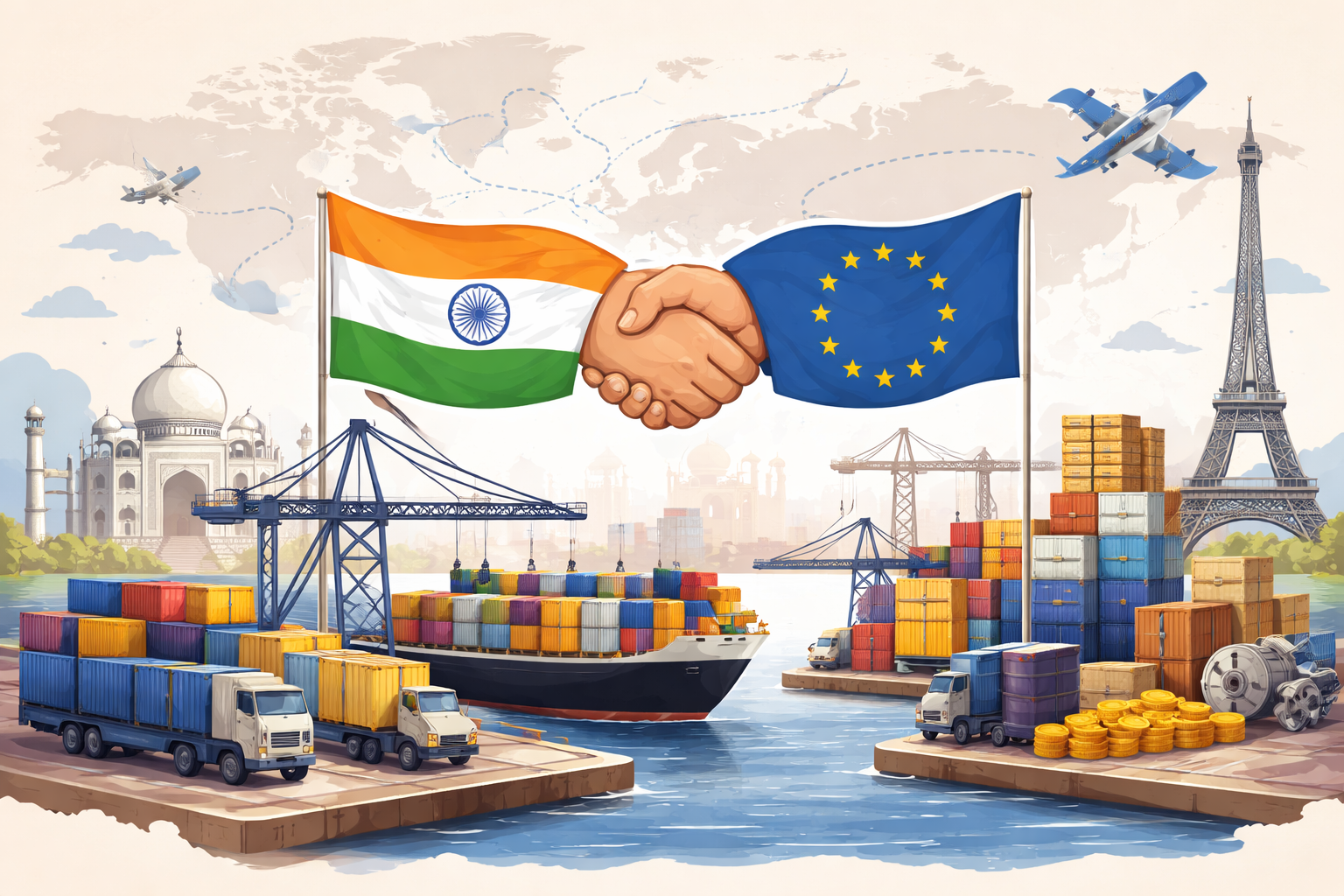
The India–EU Free Trade Agreement (FTA) was signed on 27 January 2026 and is being positioned as a “landmark” deal after years of stop-start negotiations. Reported coverage indicates it targets deep tariff reductions across most trade lines and aims to substantially expand two-way trade—but it still requires ratification/approvals before it fully takes effect.
For Indian manufacturers already operating at European railway welding compliance—especially EN 15085-2—this can be a real inflection point: the FTA can reduce landed cost disadvantages, make EU sourcing from India easier to justify, and accelerate long-term supplier development programs across the EU rail ecosystem.
Why EN 15085 matters more under an FTA
EN 15085-2 is the quality system and certification framework required (in practice, often mandatory) for welding on railway vehicles and components destined for European rail supply chains. It covers welding coordination, qualified procedures, personnel competence, inspection/testing, and production controls.
In other words: the FTA may open the door commercially, but EN 15085 is what lets you walk through it technically.
What “new opportunity” looks like in the EU rail supply chain
1) More RFQs for “EU-compliant, cost-competitive” fabrication
With broad tariff liberalization reported in the deal, EU OEMs and Tier-1s can more aggressively qualify Indian sources for:
- Welded sub-assemblies (bogie brackets, equipment frames, battery boxes, enclosures)
- Coach interior structures, seat frames, partitions
- Underframe equipment mounts and structural fabrications
- Jigs/fixtures and repeat-production weldments
2) Supplier diversification becomes a board-level KPI
EU manufacturers are actively diversifying supply chains. An FTA reduces friction and strengthens the business case for adding India as a “second source” or “long-term capacity hedge.”
3) Faster “industrialization” decisions
Even when a supplier is technically capable, sourcing teams hesitate due to total cost uncertainty (duty, customs friction, compliance overhead). FTAs reduce that uncertainty—making it easier to move from prototype orders to rate production.
The real playbook for EN 15085 suppliers in India
- Be visible where EU buyers actually check
The EN 15085 online register is used as a quality assurance reference point across the ecosystem. Ensure your listing is accurate and up to date (scope, level, processes, locations).
- Package your compliance into “buyer-ready” proof
EU procurement doesn’t want certificates alone—they want evidence of control. Prepare a digital “compliance bundle”:
- EN 15085 certificate + scope
- ISO 3834 alignment (often expected alongside)
- WPS/PQR summary, welder qualifications, welding coordination org chart
- ITPs, NDT capability, traceability flow, calibration list
- sample weld maps / weld cards / job cards (especially for CL1/critical assemblies)
- Quote in a way EU rail buyers trust
Add these to your quotation format:
- Incoterms, lead time, packing standard, corrosion protection
- material grades with EN equivalents
- FAT/FAI offer (with dimensional + weld inspection plan)
- PPAP-like approach for rail (even if not called PPAP)
- Anticipate “EU market hygiene”
In EU rail programs, you’ll routinely be asked about:
- material declarations and chemical compliance (e.g., REACH-related expectations)
- sustainability / emissions reporting (increasingly relevant as EU policies evolve)
- subcontractor control (powder coat, machining, NDT)
Even if the FTA reduces tariffs, non-tariff expectations still decide who gets long-term business.
📌 What the India-EU FTA Really Is
The India-EU Free Trade Agreement was signed on 27 January 2026 after nearly two decades of negotiations and has been hailed as the “mother of all trade deals” between India and the European Union. It marks one of the largest preferential trade agreements the two sides have ever agreed to and is expected to enter into force after ratification by India’s government and the EU Parliament/Member States (likely in early 2027).
Key features of the deal include:
- Significant tariff reductions or eliminations on a large portion of traded goods (more than 96-99% by value in most estimates).
- Harmonisation of customs procedures and non-tariff barriers to promote smoother trade.
- Greater regulatory cooperation and more predictable trade environment for goods and services.
🎯 Why This Matters for EN 15085 Certified Suppliers
EN 15085 is the European standard for welding and fabrication of railway vehicles and components — a key quality benchmark for suppliers in rail rolling stock, infrastructure, and heavy welded assemblies. Certified compliance with EN 15085 dramatically improves credibility and acceptance in EU markets.
- Preferential Market Access with Lower Tariffs
Under the FTA, industrial and engineering goods receive reduced or zero tariffs when imported into the EU from India, provided they meet the agreement’s Rules of Origin.
For EN 15085 certified products and sub-assemblies, this means:
✅ Reduced cost of exported rail components, structural welded parts, and fabricated modules — increasing pricing competitiveness in Europe.
✅ Greater attractiveness to EU OEMs and integrators (railway manufacturers and infrastructure projects) seeking reliable suppliers with certified quality.
👉 Rail and engineering exports will be cost-competitive compared with non-FTA (third-country) suppliers.
- Competitive Advantage Through Quality Certification
EN 15085 isn’t just another certification — it’s often mandatory for suppliers in European rail supply chains (rolling stock, bogies, couplers, pressure vessels used in trains, etc.). Indian suppliers with EN 15085 certification therefore stand out in several ways:
🔹 Fewer technical barriers to entry — EU buyers can source directly without costly re-qualification cycles.
🔹 Improved risk perception — certified weld quality reduces audit overhead and improves buyer trust.
🔹 Enhanced access to subcontracted rail and transport supply chains — especially in value-added assembly, fabrication, and integration roles.
FTA tariff benefits + EN 15085 quality assurance = highly competitive positioning in EU tendering processes.
- Stronger Integration into EU Supply Chains
The deal’s focus on predictable trade rules and regulatory cooperation can help facilitate:
🚚 Simpler customs clearance and classification
🔎 Clearer compliance pathways for standards-aligned products
🤝 Joint ventures and partnerships with EU firms
🛠 Access to maintenance, repair, and overhaul (MRO) contracts under more favorable terms
This can unlock opportunities not just in finished exports, but also in subcontracting and co-manufacturing arrangements with European OEMs and component suppliers — especially in rail, infrastructure machines, and heavy engineering.
- Services + Skilled Mobility
Although goods tariff cuts are the headline, services provisions in the FTA also matter. These include smoother contractual terms for engineering services, project management, consulting, and movement of personnel under certain categories.
For Indian firms with EN 15085 competence, this opens up:
🧠 Technical consulting and engineering services for European clients
👷♂️ Secondments of QA, QC, and welding engineers (subject to mobility provisions)
📋 Training partnerships with EU bodies (standards implementation, safety compliance)
This is particularly relevant in rail and heavy fabrication, where both certified manufacturing and certified engineering expertise are prized.
🧠 Strategic Opportunities for EN 15085 Certified Suppliers
Here are the practical opportunities created by the India-EU FTA:
1) Export of Rail Components & Modules
- Welding-intensive sub-assemblies (bogies, chassis, couplers, brackets) with EN 15085 certification can enter EU tariff-free or at significantly reduced duties.
- Higher export volumes and direct supply relationships with EU rail OEMs.
2) Entry Into High-Value Project Tenders
- Indian firms become price-competitive bidders for European infrastructure and rolling stock supply contracts.
3) Supply to Multinational OEMs Based in India
- Many EU rail/OEM firms have Indian operations (locomotive and metro producers). FTA benefits can make India-based manufacturing hubs more attractive to parent companies.
4) Enhanced Role in Aftermarket & Repair
- With EN 15085 certification, Indian firms can offer fabrication, retrofit and refurbishment services to EU operators under improved cost structures.
5) Strategic Partnerships
- Joint ventures, licensing, and co-manufacturing deals with European partners become easier, especially where EN 15085 compliance is a mutual requirement.
🛠 Key Enablers You Should Leverage
To fully capitalise on the FTA, EN 15085 certified suppliers should consider:
📌 Compliance with Rules of Origin — ensuring parts meet criteria to qualify for tariff benefits.
📌 Certification Documentation — robust traceability, audit records, and quality system links to EN 15085.
📌 Market Intelligence — targeting EU rail OEMs, tier-1 suppliers, and infrastructure projects.
📌 Local Representation — EU-based agents or offices to facilitate tendering and compliance navigation.
📌 Bottom Line
The India-EU Free Trade Agreement dramatically improves market access for Indian exporters, and for EN 15085 certified suppliers, it represents a convergence of tariff preferential treatment and technical credibility that can unlock rail-sector exports, strategic partnerships, and expanded engineering contracts in one of the world’s most advanced industrial markets.
LSW is an EN 15085-certified Indian manufacturer helping EU rail buyers secure predictable quality, stable pricing and long-term capacity. Let’s explore sourcing feasibility for your next program. Get in touch with us at mayur@lsw.co.in

0 Comments