

Lasercut Steelworks Pvt. Ltd. (LSW) | BESS Manufacturing Series
The cheapest enclosure is not always the lowest-cost enclosure.
When developing a Battery Energy Storage System (BESS), project discussions naturally focus on the major cost drivers: battery cells and modules, power conversion systems, transformers, energy-management systems, HVAC, fire protection, civil works and electrical infrastructure. Against these items, the enclosure can appear to be a relatively straightforward fabricated structure.
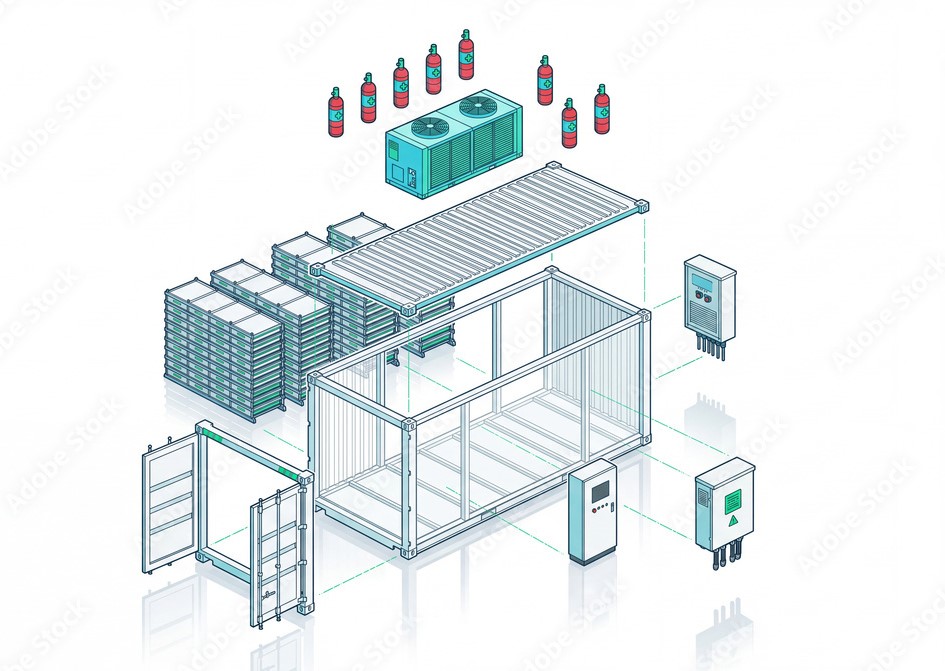
But the enclosure is where many of the system’s physical interfaces come together. It must accommodate equipment, mounting points, doors, cable entries, cooling provisions, sealing arrangements, structural requirements and protective finishing. If any of these details are not manufactured or coordinated correctly, the consequences can extend beyond the enclosure itself.
The purchase price is therefore only one part of the actual cost. Rework, transport complications, installation delays, component-fitment problems, coating defects, maintenance and late modifications can all increase the total cost of a BESS project.
The right question is not simply, “How much does the enclosure cost?”
It is, “What will this enclosure cost to manufacture, deliver, install, maintain and support over its intended service life?”
At Lasercut Steelworks Pvt. Ltd. (LSW), we understand that successful sheet-metal fabrication involves more than manufacturing individual components. It requires coordination between design, manufacturing processes, finishing and assembly to deliver a product that meets the intended requirements.
1. The Quoted Price Is Only the Beginning
Imagine two suppliers quoting for a similar BESS enclosure. Supplier A offers the lower price. Supplier B’s quotation is slightly higher, but it includes stronger manufacturing coordination, dimensional checks, finishing controls and assembly planning. If the decision is made only on the purchase order value, Supplier A may appear to be the obvious choice.
The comparison changes if the enclosure arrives with misaligned mounting holes, doors that do not fit properly, HVAC openings that need correction, cable-entry positions that conflict with the approved layout, or coating defects that require attention. The initial saving can be consumed by extra labour, inspection, replacement parts and delays.
This is one of the most important hidden costs in BESS manufacturing: the cost of fixing a problem after the enclosure reaches the project site.
A supplier quotation should be evaluated against the defined scope. Are fabrication, finishing, assembly and inspection included? Are tolerances and acceptance criteria clear? Who is responsible for resolving interface mismatches? Are packaging and handling provisions specified?
A low price is meaningful only when the deliverable and quality expectations are comparable.
For BESS OEMs, EPCs and system integrators, the objective should be to compare the total cost and risk of the delivered assembly—not simply the cost per unit.
LSW provides a range of sheet-metal fabrication services covering multiple stages of the manufacturing process. When evaluating an enclosure supplier, developers should look for a manufacturing partner who understands how individual operations affect the final product.
2. Rework Becomes More Expensive After Dispatch
Rework inside a manufacturing facility is different from rework at a project site.
In the factory, the work can be carried out using established machines, measuring equipment, suitable fixtures and the normal production team. At site, the same correction may require additional manpower, tools, access arrangements, permits, safety coordination and a fresh inspection.
A mounting hole that can be corrected quickly before dispatch may become a much larger task after equipment has been positioned or the enclosure has been installed. A door-fitment issue may require adjustment of adjacent panels. A cable-entry mismatch can affect the installation sequence. A coating defect may require surface preparation and repair under less controlled conditions.
These corrections can also affect other activities. Installation teams may have to wait, equipment commissioning may be rescheduled, and additional coordination may be required between the fabricator, equipment supplier and project team.
This is why dimensional inspection and fitment checks should be planned throughout production, not left until the end.
Critical interfaces—such as mounting plates, HVAC cut-outs, cable entries, doors and access panels—should be checked against the approved drawings and project requirements at suitable stages.
LSW’s sheet-metal fabrication capabilities support a coordinated manufacturing approach, from design and component preparation through fabrication and quality checks. The objective is to help deliver a production-ready assembly rather than a collection of parts that still needs extensive correction at site.
3. Design-for-Manufacturing Can Reduce Avoidable Cost
Some hidden costs begin before the first sheet is cut.
A design can be technically complete on a drawing yet remain difficult, slow or expensive to manufacture. Examples include unnecessary welds, difficult bend sequences, inaccessible welding locations, overly complex brackets, poorly positioned holes, unrealistic tolerances and panels that need additional reinforcement.
These details influence cycle time, material use, tooling, inspection and assembly. If a problem is identified after production starts, the team may need to revise drawings, remake parts or change the manufacturing sequence. If it is identified after finishing or installation, the cost can be higher still.
A manufacturing review before production can identify practical improvements while preserving the customer’s approved design intent.
Questions may include:
- Can the component be cut and bent using the intended manufacturing processes?
- Is the welding sequence practical, and are the joints accessible?
- Can the part be handled and assembled safely?
- Are the specified tolerances appropriate to the function?
- Can the component be inspected effectively?
- Are service and maintenance access points practical?
- Can the design be manufactured consistently if production volumes increase?
These questions help connect engineering design with actual manufacturing conditions.
LSW’s CAD Designing & Prototyping services support the process of translating sheet-metal designs into manufacturable components. Early coordination between design and production can help identify potential difficulties before they become shop-floor or site problems.
The objective is not simply to make a design easier to manufacture. It is to produce the required component accurately, consistently and efficiently while respecting the approved specifications.
For BESS developers, involving a fabrication partner during the early design stage can help identify practical manufacturing considerations before they affect production schedules and project costs.
4. Small Dimensional Errors Can Affect the Whole Assembly
Large enclosures contain multiple parts that must work together.
A small variation in one panel may appear insignificant when that component is viewed on its own. However, when several panels, brackets, doors and mounting plates are assembled, small variations can accumulate and affect the final fit.
The consequences may include additional fitting work, panel gaps, door-alignment problems, component interference or delays while the team determines which part needs correction.
This is particularly important when the enclosure interfaces with equipment supplied by different manufacturers. The enclosure may be fabricated by one company, while batteries, HVAC equipment, electrical panels and other components are supplied by separate vendors. Each component must fit within the agreed interface requirements.
For example, an HVAC opening that does not match the equipment interface may require modification. A mounting plate with incorrectly positioned holes may delay installation. A door that does not close properly may require further inspection of alignment, clearances and sealing arrangements.
Dimensional control is therefore not just a final-inspection activity.
Laser cutting establishes the initial geometry. Bending changes the relationship between surfaces. Welding can introduce heat-related movement. Grinding and finishing affect interfaces. Assembly reveals whether the complete set of parts fits as intended.
LSW’s laser-cutting services and CNC press-brake and metal-folding capabilities form part of this manufacturing sequence. The effectiveness of the complete process depends on coordinating each stage with the approved drawings and tolerances.
A coordinated process helps identify deviations early, when corrective action is generally easier to manage.
Inspection points should be based on the approved drawings, customer requirements and the criticality of each interface.
5. Transportation and Handling Are Part of the Cost
BESS enclosures can be large and heavy fabricated structures. Their transport requirements can influence the design, packaging, lifting provisions, delivery sequence and site preparation.
A structure that is efficient to manufacture is not automatically easy or economical to move.
Before production and dispatch, project teams should consider:
- Overall dimensions and weight.
- Lifting points and handling provisions.
- Packaging and protection during transit.
- Loading and unloading arrangements.
- Transport restrictions and site access.
- Crane and material-handling requirements.
- Delivery sequence and installation schedule.
These details should be coordinated with the approved design and the logistics plan.
If lifting provisions are unclear, packaging is inadequate or the delivery configuration does not suit site access, the project may incur extra handling, rescheduling or repair. Damage during transport may also require inspection and corrective work before installation can proceed.
For large fabricated assemblies, the logistics plan should be considered before manufacturing is complete. It is more effective to identify handling constraints during planning than to discover them when the enclosure is ready for dispatch.
Transport planning should therefore be considered alongside manufacturability and assembly—not treated as a separate activity after the enclosure is complete.
LSW’s renewable-energy fabrication capabilities include battery-storage-related enclosures and equipment housings. For any project, transport and handling arrangements should be agreed in accordance with the actual enclosure design, weight, dimensions and delivery requirements.
6. Finishing Is a Performance Consideration, Not Just Appearance
Outdoor BESS installations may be exposed to rain, humidity, dust, ultraviolet radiation, industrial pollutants and temperature changes. The required surface-protection system should be defined according to the project specification and the expected environment.
A coating defect or unsuitable surface preparation can lead to premature deterioration and maintenance work. Repairing a finish after the enclosure has been assembled or installed may be more difficult than controlling the process in the factory.
Coating requirements can also affect masking, grounding points, gasket interfaces, mounting surfaces and final fitment.
Finishing should therefore be considered during manufacturing planning.
The project team should clarify:
- The required coating or painting system.
- Surface preparation requirements.
- Specified colour and finish.
- Inspection and acceptance criteria.
- Areas that must remain uncoated.
- Surfaces that require masking or protection.
- Requirements for corrosion resistance.
The final finish should follow the customer’s approved specification and the conditions for which the enclosure is designed.
LSW provides powder-coating services as part of its wider sheet-metal manufacturing capabilities. Powder coating can provide a durable finish when the surface preparation, coating system and application process are suitable for the component and its intended environment.
However, the appropriate coating specification must always be established according to project requirements. No single finishing process should be assumed suitable for every BESS installation.
Coating is not simply a cosmetic final step. It forms part of the complete manufacturing process and must be coordinated with fabrication, assembly and inspection.
A suitable finishing process can help reduce avoidable repair work and support the expected service life of the finished enclosure.
7. Multiple Supplier Handoffs Can Add Coordination Cost
If one supplier cuts the panels, another performs bending, another handles welding, a separate vendor applies the finish and a further party assembles the enclosure, every handover introduces a coordination point.
Parts may need to be transported between locations, checked on receipt, scheduled into another production queue and inspected again.
This structure can work, but it requires clear ownership, document control, scheduling and communication. If a defect is found, the project team may need to determine which process introduced it and who is responsible for correction.
A delay at one stage can also affect the downstream schedule. For example, if fabricated parts arrive late for coating, the assembly schedule may be affected. If a component is returned for correction, other parts may remain idle while the issue is resolved.
An integrated manufacturing partner can reduce some of this complexity by coordinating several stages within one production workflow.
At LSW, the relevant capabilities include:
Laser Cutting → CNC Bending → Welding and Fabrication → Grinding and Deburring → Finishing → Assembly → Inspection
You can explore LSW’s sheet-metal fabrication services, welding capabilities, powder coating and electro-mechanical assembly to understand the different stages available within its broader manufacturing offering.
LSW’s electro-mechanical assembly services cover assembly requirements for a range of products. The specific scope for any BESS enclosure project should be defined according to the customer’s drawings, specifications and integration requirements.
The advantage of an integrated approach is improved coordination across manufacturing stages, clearer visibility of the production sequence and fewer separate handovers to manage.
Integration does not remove the need for approved drawings, clear specifications or customer acceptance criteria. Its value is in making the production sequence and responsibility for interfaces easier to coordinate.
8. Late-Discovered Problems Can Have the Greatest Impact
The cost of a manufacturing problem often grows as the product moves through the project.
A design issue identified during review may require only a drawing clarification. The same issue found after cutting may require remaking parts. Found after welding, it may involve dismantling or additional fabrication. Found after coating or installation, it can require repair, reinspection and schedule changes.
A useful way to think about this is:
Design Review → Manufacturing Correction → Post-Fabrication Rework → Site Modification → Potential Project Delay
This is not a fixed cost formula. It illustrates why early detection matters.
The later a problem is discovered, the more activities may already depend on the affected component. Correcting the issue can then require coordination across several teams and suppliers.
Before production begins, developers and OEMs should confirm the following:
- The design is manufacturable using the intended processes and approved materials.
- Critical dimensions and tolerances are clearly defined and realistic.
- Welds and fasteners are accessible for production and inspection.
- HVAC openings, cable entries and equipment mounting points match approved interfaces.
- Doors, panels, gaskets and sealing arrangements are defined.
- The finishing system suits the project specification and environment.
- Lifting, packaging, transport and site-handling requirements are understood.
- Inspection records, acceptance criteria and responsibility for corrective action are agreed.
These checks help the project team address manufacturing risks before they become more expensive problems.
LSW’s CAD Designing & Prototyping services can be relevant during early design coordination, while its manufacturing services support the conversion of approved designs into fabricated components.
The objective is to identify issues at the earliest practical stage and reduce the risk of avoidable changes during production or installation.
9. What Should Developers Compare When Selecting a Supplier?
A useful supplier comparison considers more than the unit price. It should assess whether the supplier can consistently manufacture the approved design, control critical dimensions, coordinate finishing and assembly, inspect the finished product and meet the agreed delivery schedule.
A practical comparison can include the following factors.
1. Price and scope of supply
Confirm exactly what is included in the quotation. Fabrication, finishing, assembly, inspection, packaging and other requirements should be clearly defined.
2. Manufacturing capability
Evaluate whether the supplier can coordinate the required cutting, bending, welding, fabrication and finishing processes.
3. Dimensional control and inspection
Understand how critical dimensions and equipment interfaces will be checked throughout production.
4. Finishing capability
Confirm that the proposed process can meet the approved surface preparation, coating and inspection requirements.
5. Assembly and interface management
Check whether the supplier can manage the fitment of panels, doors, mounting plates and other specified interfaces.
6. Lead time and delivery planning
Assess the proposed production schedule, capacity and coordination of manufacturing stages.
7. Documentation and corrective action
Clarify inspection records, acceptance criteria, traceability requirements where applicable, and how deviations will be handled.
8. Packaging, transport and handling
Confirm that the delivery arrangement is compatible with the enclosure dimensions, handling requirements and project-site conditions.
LSW’s website provides further information about its renewable-energy sector experience and manufacturing techniques. These pages can help prospective customers understand the range of capabilities relevant to their projects.
The right weighting depends on the project. A highly customised enclosure with many interfaces may need closer attention to design review and assembly fitment. An outdoor installation may place greater emphasis on the specified surface-protection system.
The supplier should be evaluated against the actual project requirements rather than a generic checklist alone.
A slightly higher manufacturing price can sometimes result in a lower overall project cost when it reduces rework, coordination effort and avoidable delays.
That is the hidden economics of BESS enclosure procurement.
Conclusion: Evaluate the Enclosure by Its Total Project Impact
The enclosure may represent only one part of the total BESS investment, but its design and manufacturing quality can influence installation, integration, durability, maintenance and delivery.
Dimensional inaccuracies can affect fitment. Poor manufacturing planning can create rework. Inadequate finishing can lead to maintenance concerns. Multiple handovers can increase coordination demands. Problems discovered late can become expensive site issues.
The objective should not be to select the cheapest BESS enclosure in isolation.
It should be to select a manufacturing solution that meets the approved requirements while managing total project cost and risk.
At Lasercut Steelworks Pvt. Ltd. (LSW), our approach brings together laser cutting, bending, welding, finishing, assembly and inspection within a coordinated manufacturing process.
Our CAD Designing & Prototyping capability can support early manufacturability review, while our sheet-metal fabrication services, powder coating and electro-mechanical assembly support different stages of the manufacturing workflow.
Our renewable-energy fabrication services are relevant to projects involving battery-storage enclosures and other equipment housings. The precise scope, specifications and acceptance criteria should be agreed for each project.
By coordinating manufacturing processes and paying attention to critical interfaces, the aim is to help convert approved engineering designs into finished assemblies that are ready for the next stage of the project.
The price of an enclosure is visible on the quotation. The cost of a poorly coordinated enclosure often appears later.
If your BESS enclosure, battery cabinet or energy-storage equipment housing is moving from engineering drawing to production, visit www.lsw.co.in to learn more about our manufacturing capabilities, or contact LSW to discuss your project requirements.
From Engineering Drawing to Ready-to-Dispatch BESS Assembly.



0 Comments